
Field Data Collection Platform: Research, Surveys & Citizen Science
Collect georeferenced observations for research, surveys, and field studies.
Describe your project and we'll create a custom map for you.
What is a research and field data collection tool?
Field data collection with Mark-a-Spot works on any smartphone or tablet. Research teams define their observation categories, each with custom attributes (species name, condition rating, sample type, or whatever the study requires). Contributors open the map, drop a pin at their location, take a photo, fill in the attributes, and submit. The record carries GPS coordinates from the device, a timestamp, and the photo with its EXIF metadata.
Professional researchers use FieldResearch for structured surveys: biodiversity monitoring across transects, archaeological site inventories, tree health assessments, environmental damage mapping after storms or floods. Citizen science projects use the same tool to mobilize volunteers at scale. A university publishes the map link, participants contribute observations from the field, and the dataset grows without hiring additional staff.
Every observation is accessible through the Open311 API, the same open standard used by cities worldwide. Filter by category, date range, or bounding box. Export to CSV for spreadsheets, GeoJSON for QGIS and ArcGIS, or consume the JSON API directly from R, Python, or any analysis pipeline. The dashboard provides visual summaries and direct download.
Data ownership stays with the project. The platform runs on open standards, so data is never locked in. Multi-language support covers 17 languages, making it suitable for international research collaborations. Photo documentation with GPS metadata provides verifiable evidence chains for regulatory compliance, academic publications, and long-term monitoring programs.
Who is this for?
Communities
Resident groups, school parents, neighbourhood initiatives collecting local data.
Organizations
NGOs, nonprofits, and research teams running participatory mapping projects.
Municipalities
City administrations and public agencies managing citizen reports at scale.
Use Cases
University research projects
Build georeferenced datasets for field studies. Define custom attributes per observation type, deploy to student teams and field assistants, and export structured data for statistical analysis and GIS workflows. The Open311 API integrates with R, Python, and QGIS.
Environmental agencies and monitoring
Track environmental conditions across jurisdictions. Document pollution events, habitat degradation, and species distribution changes with timestamped, photo-verified records. Dashboard analytics show trends and support regulatory reporting.
Archaeological field documentation
Record finds with precise GPS coordinates, photos, and configurable attributes (period, material, context). Build a spatial inventory of excavation sites, surface finds, and survey transects. Export to GIS for site analysis and publication maps.
Community citizen science
Engage volunteers in data collection at scale. Share a map link, and participants contribute observations from any smartphone. Project coordinators review submissions, curate the dataset, and publish results. No app installation required.
Categories included
Common issues reported include road damage, broken streetlights, illegal dumping, graffiti, and more. Each category can be customized from your dashboard after setup.
What you get
Custom Attributes per Category
Each observation category (Service Definition) carries its own attribute set: species name, condition rating, sample type, material, or any field your study needs. Configured in the admin panel, no code changes required.
GPS Photo Documentation
Every record includes a photo with GPS coordinates and EXIF metadata from the device. The combination of visual evidence and precise location creates a verifiable record chain for publications and regulatory compliance.
Open311 API Export
All data is accessible through the Open311 API. Filter by category, date, or bounding box. Export to CSV, GeoJSON, or JSON for direct use in R, Python, QGIS, ArcGIS, and any analysis pipeline.
Multi-language Support
The platform supports 17 languages, making it suitable for international research collaborations and cross-border citizen science projects. Categories and attributes can be localized.
See it in action
From data collection to insights
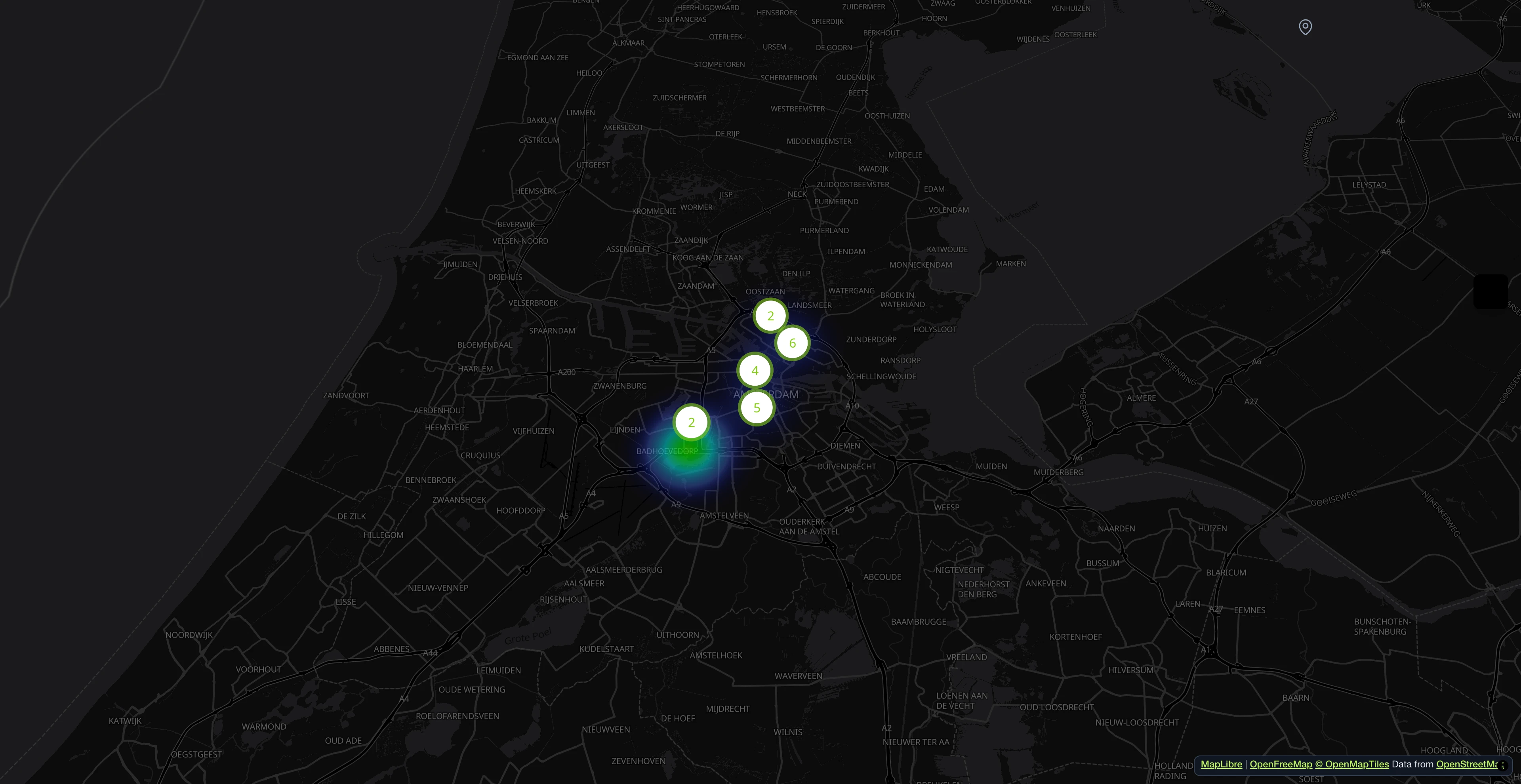
Contributors pin issues with photos and location. Markers cluster automatically and color-code by category.
Take a photo, AI does the rest
Citizens upload a photo. The AI identifies the category, drafts a description, and pre-fills attributes in real time. The reporter edits and sends.

Reports on an interactive map
Contributors pin issues with photos and location. Markers cluster automatically and color-code by category.

All reports at a glance
Search, filter, and sort all incoming reports. Assign departments, update statuses, and keep track of every issue from submission to resolution.

AI writes the report for you
Upload a photo, and the system generates a detailed description, extracts category attributes, and scores the hazard level. Edit before submitting.

AI-powered processing pipeline
Reports are indexed for duplicates, classified for hazard level, scored for sentiment, and auto-filled with category-specific attributes. All runs as a background batch.

Open311-compliant service catalog
Every category is served as an Open311 GeoReport v2 service with typed attributes, dropdown options and per-language labels. No vendor lock-in.

Everything in one dashboard
Track KPIs, manage reports, assign teams. AI analyzes photos for hazards and sentiment automatically.

- 1M+ reports since 2011
- Open Source
- Open311 GeoReport v2
- EU-hosted
Try it live:demo.mark-a-spot.com/amsterdam
Need facility management, custom WMS layers, structured data fields per workflow status, or multi-district and multi-city setups? Explore the full platform atmark-a-spot.com
Start your Research & Field Data Collection
Describe your project and our AI will configure the perfect workspace for you.