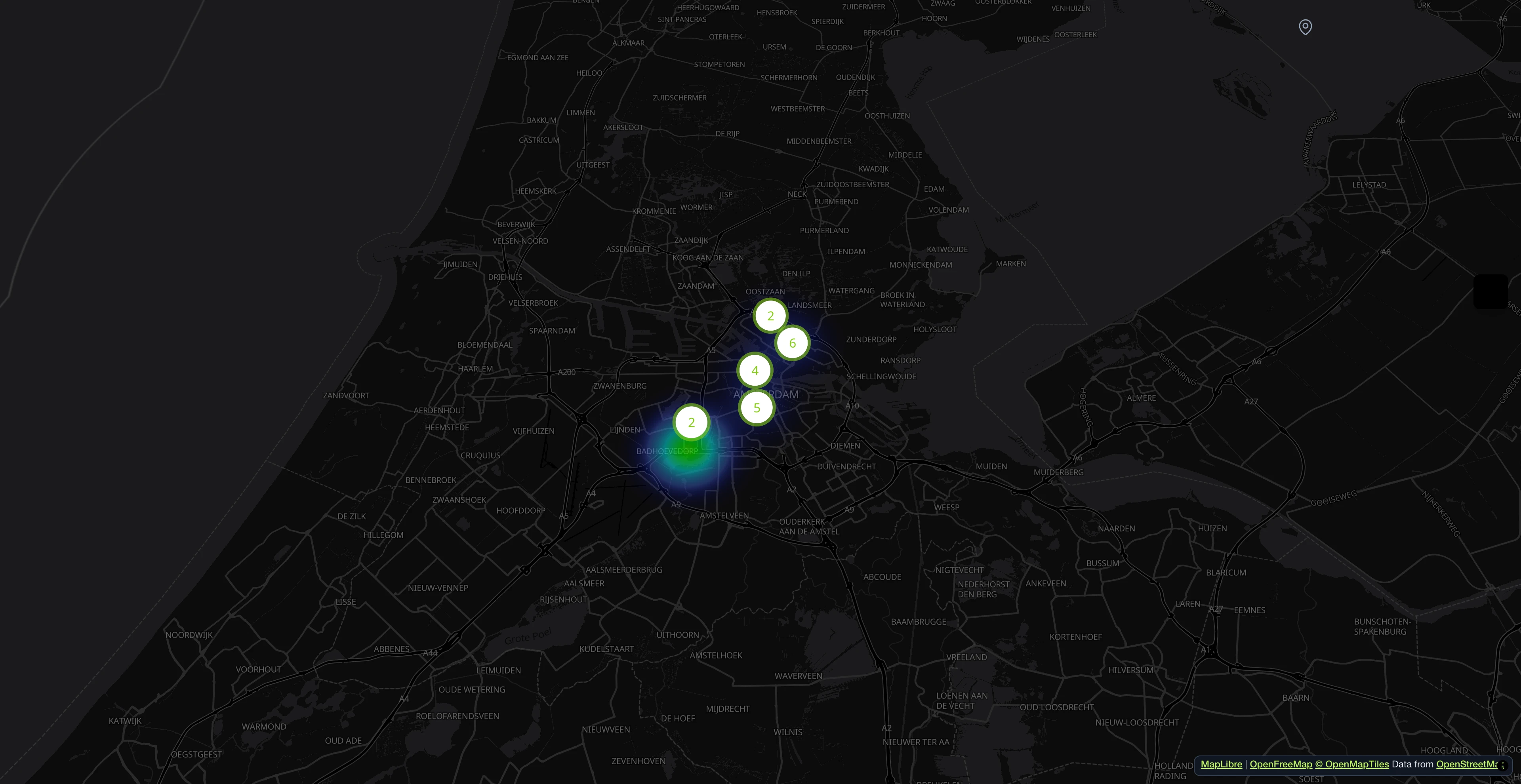

Urban Climate Risk Map: Identify Heat Islands & Flood Risks
Monitor climate impacts like heat hotspots or flooding areas on a map.
Podívejte se v praxi
Od sběru dat k poznatkům
Ukázková klimatická mapa s příkladovými záznamy: podívejte se, co obyvatelé pozorují a jak skupina každé pozorování ověřuje.
Každý tepelný ostrov a zatopený kout na jedné mapě
Obyvatelé zaznamenávají rozpálená náměstí, zatopené kouty, chybějící stín a zpevněné plochy. Z mnoha drobných pozorování vzniká obraz horka a vody, ulici po ulici.
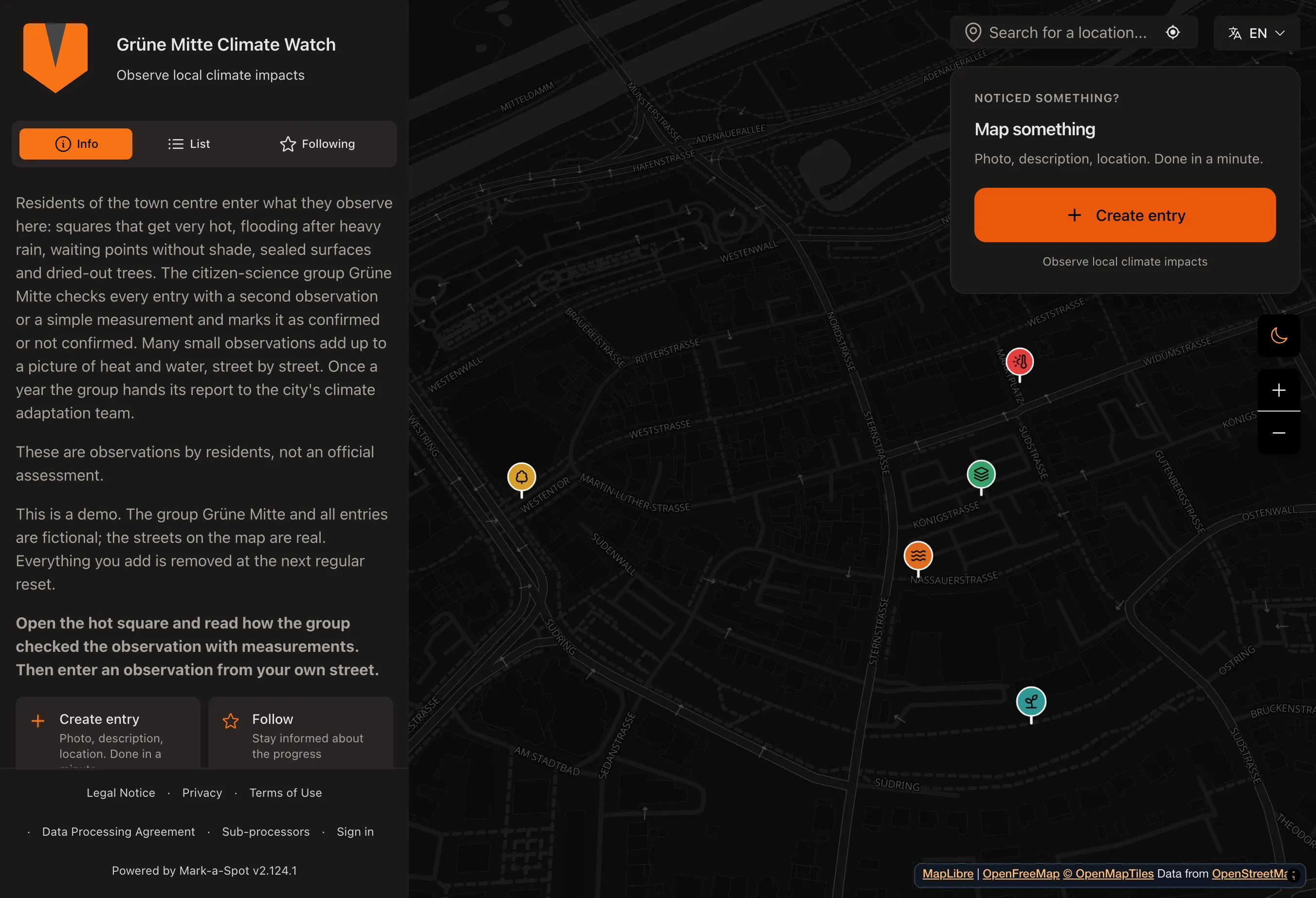
Vyfoťte, AI navrhne kategorii a text
Někdo vyfotí zastávku bez stínu. AI navrhne kategorii a krátký popis, osoba vše zkontroluje a záznam uloží.
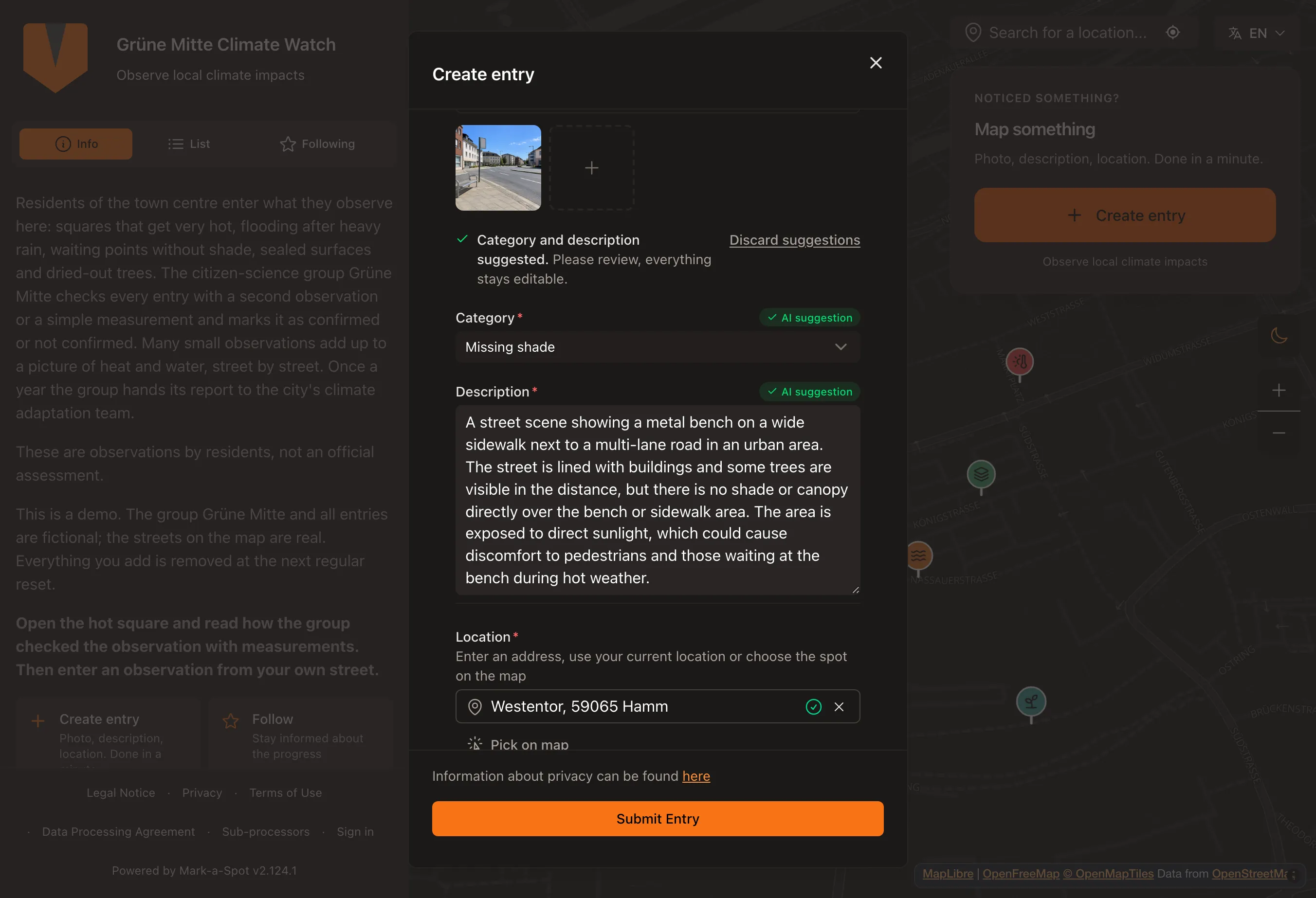
Od rozpáleného náměstí k potvrzenému pozorování
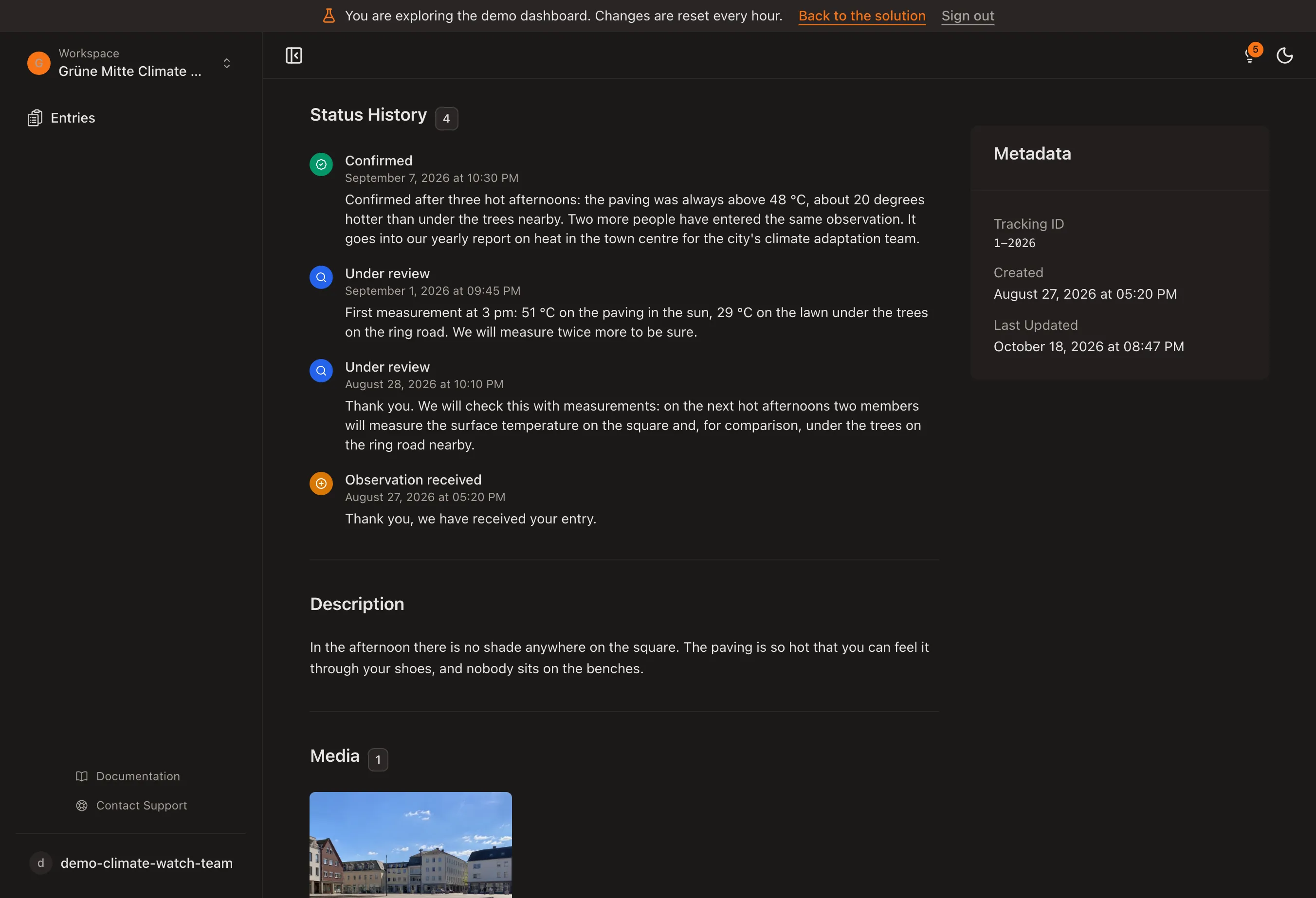
Skupina měří dlažbu ve třech horkých odpoledních, připíše hodnoty a pozorování potvrdí. Co se nepotvrdí, zůstane viditelné jako nepotvrzené.
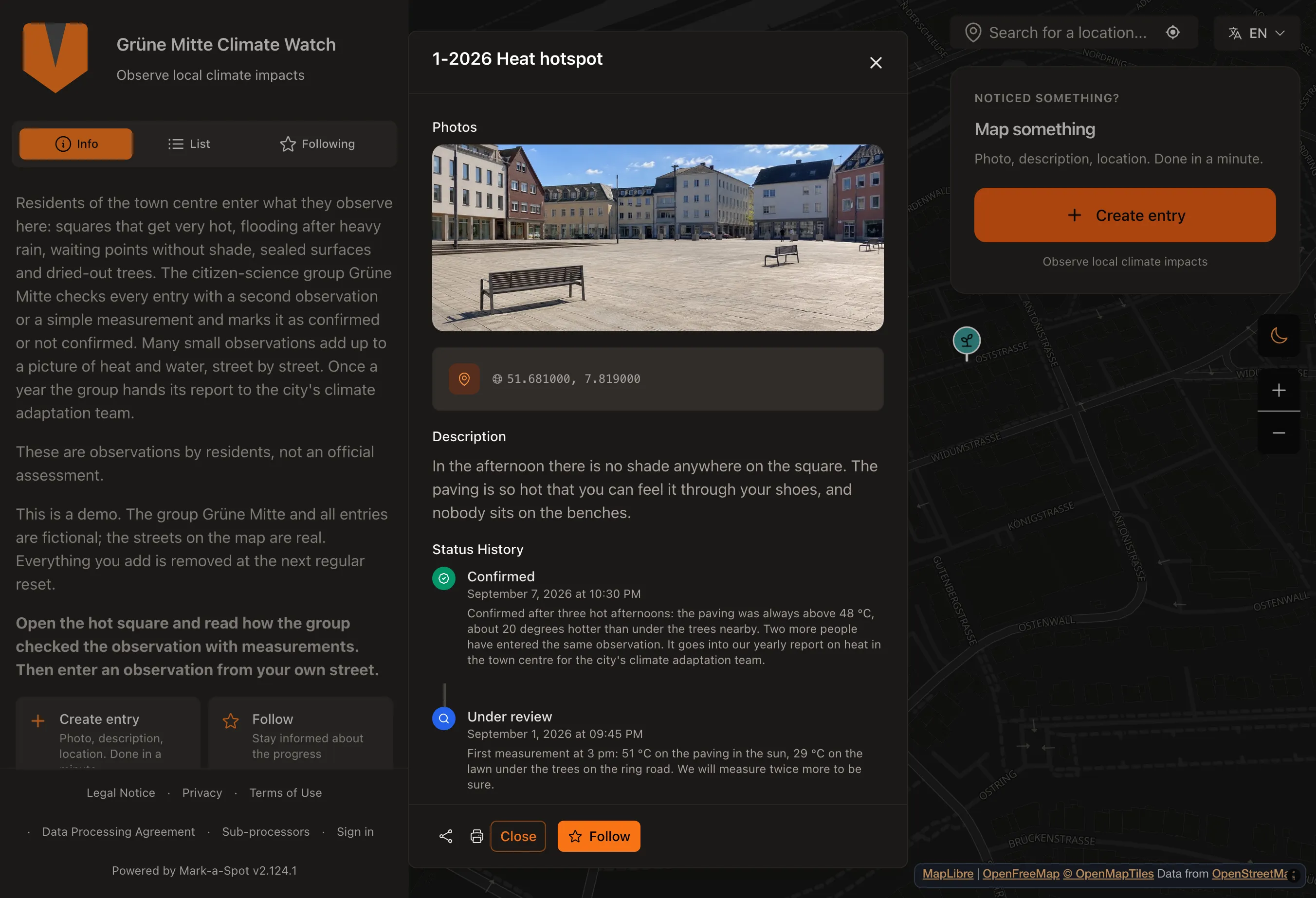
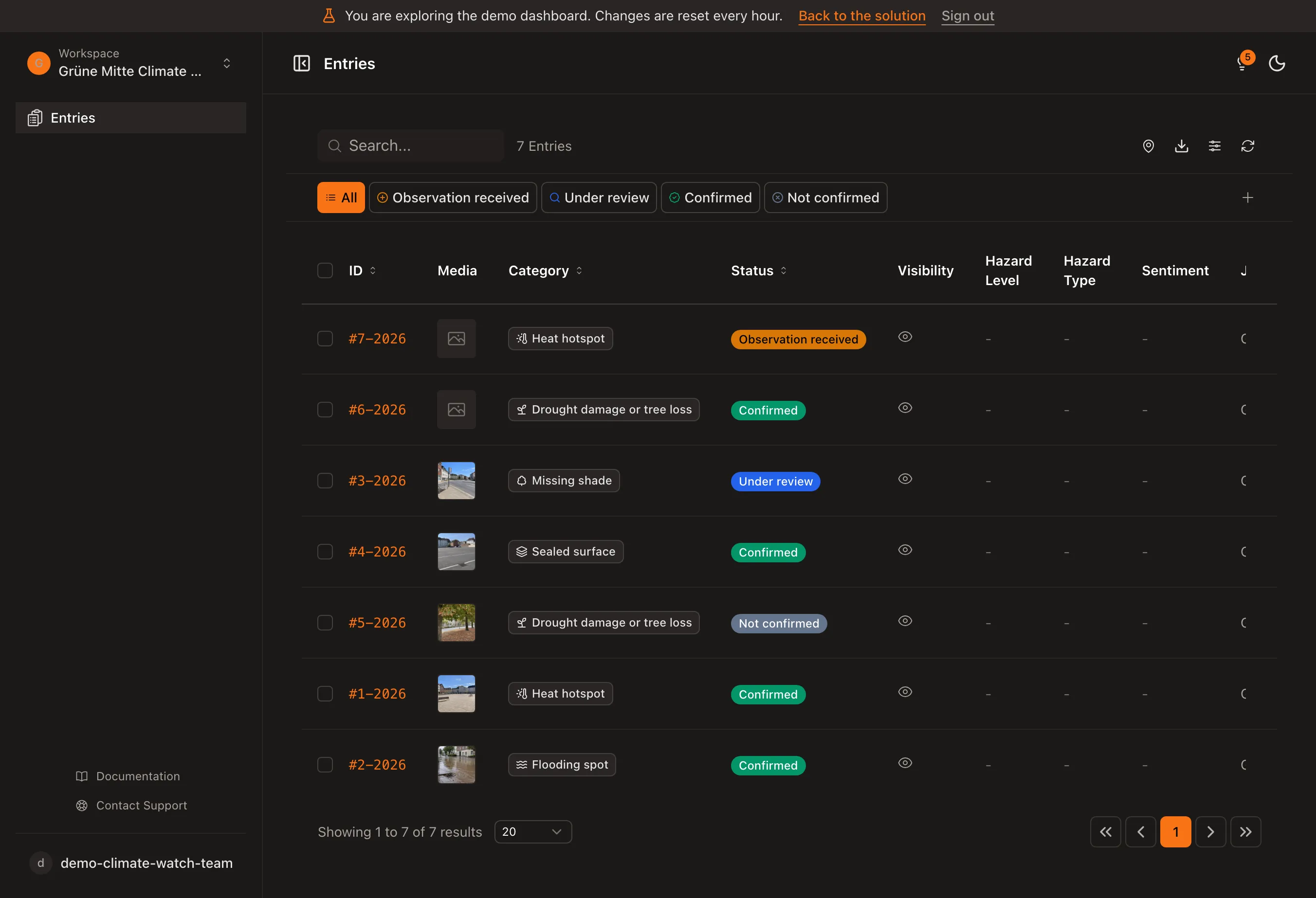
Všechna pozorování v jednom seznamu
Skupina filtruje podle kategorie a stavu a vidí, co před výroční zprávou potřebuje ještě druhý pohled.
Účet není potřeba.
Podívejte se, jak bylo pozorování ověřeno
Otevřete záznam v dashboardu a prohlédněte si jeho stav, veřejné odpovědi a celou historii, tak jak je vidí skupina.
Účet není potřeba.
- 1M+ hlášení od roku 2011
- Open Source
- Open311 GeoReport v2
- Hostováno v EU
Co je Urban Climate Risk Map?
Urban climate risk mapping documents how heat, flooding, and extreme weather affect specific locations in a city. Residents and local climate groups record heat islands, flood-prone intersections, drought damage, and storm water runoff on a shared map. Each observation carries a GPS location, photo, and category. The resulting dataset reveals climate risks block by block, not as abstract models but as documented conditions on the ground.
Contributors choose from predefined categories: heat hotspot, flooding spot, missing shade, sealed surface, or drought damage and tree loss. A smartphone photo at the location is enough to start a record. The data supplements official climate models with hyperlocal community observations.
Municipal climate adaptation teams, environmental NGOs, and urban planners use the collected data to prioritize investments in green infrastructure, drainage improvements, and shade planning. CivicSpot provides the platform, communities provide the observations. The Open311 API makes all data available for GIS analysis and policy reports.
- Heat Island Mapping
- Contributors document urban heat hotspots: sun-exposed plazas, concrete surfaces without shade, and areas with missing tree cover. Clustered reports reveal the heat island pattern across the city.
- Flood Risk Reporting
- Residents report locations where water collects during heavy rain: underpasses, low-lying streets, clogged drains. The data builds a community-sourced flood risk map that supplements official models.
- Urban Microclimate Data Collection
- Observations cover drought damage, storm water runoff, tree loss, and soil erosion. Each report includes GPS location and photo. Over time the dataset captures how climate impacts play out block by block.
- History stays
- Entries keep their date, photo and status. The list in the dashboard and the CSV export show later what was observed when.
Pro koho to je?
For climate initiatives and environmental groups
Run neighborhood-level climate observation campaigns. Volunteers document heat hotspots, flooding, and tree loss. The data gives local groups concrete evidence for conversations with city administrations about climate adaptation measures.
For municipalities and climate adaptation teams
Receive structured, GPS-documented climate risk observations from residents. Identify which streets and intersections are most affected by heat or flooding. Use the data to prioritize green infrastructure investments and drainage improvements.
For urban planners and researchers
Access hyperlocal climate impact data collected over time. Filter by category or area to analyze patterns. Export via Open311 API for GIS integration and research publications.
Zahrnuté kategorie
Tyto kategorie jsou součástí šablony. Po nastavení je lze v dashboardu přejmenovat, doplnit nebo odstranit.
- Heat hotspot
- Flooding spot
- Missing shade
- Sealed surface
- Drought damage or tree loss
Založit Urban Climate Risk Map
Popište jednou větou, o co jde. Potom jsou mapa, kategorie a stavy připravené a vše můžete upravit.
Další šablony
Track trail conditions such as fallen trees, erosion or damaged bridges.
Hlásit problémy
Collect georeferenced observations for research, surveys, and field studies.
Mapovat místa
Map damage after floods, storms, wildfires, earthquakes or other disasters.
Mapovat místa