
Veldgegevens verzamelplatform: onderzoek en citizen science
Verzamel georefereerde waarnemingen voor onderzoek en veldstudies.
Beschrijf je project en we maken een aangepaste kaart voor je.
Wat is een tool voor onderzoek en veldgegevensverzameling?
Field data collection with Mark-a-Spot works on any smartphone or tablet. Research teams define their observation categories, each with custom attributes (species name, condition rating, sample type, or whatever the study requires). Contributors open the map, drop a pin at their location, take a photo, fill in the attributes, and submit. The record carries GPS coordinates from the device, a timestamp, and the photo with its EXIF metadata.
Professional researchers use FieldResearch for structured surveys: biodiversity monitoring across transects, archaeological site inventories, tree health assessments, environmental damage mapping after storms or floods. Citizen science projects use the same tool to mobilize volunteers at scale. A university publishes the map link, participants contribute observations from the field, and the dataset grows without hiring additional staff.
Every observation is accessible through the Open311 API, the same open standard used by cities worldwide. Filter by category, date range, or bounding box. Export to CSV for spreadsheets, GeoJSON for QGIS and ArcGIS, or consume the JSON API directly from R, Python, or any analysis pipeline. The dashboard provides visual summaries and direct download.
Data ownership stays with the project. The platform runs on open standards, so data is never locked in. Multi-language support covers 17 languages, making it suitable for international research collaborations. Photo documentation with GPS metadata provides verifiable evidence chains for regulatory compliance, academic publications, and long-term monitoring programs.
Voor wie is dit?
Gemeenschappen
Bewonersgroepen, schoolouders, buurtinitiatieven die lokale gegevens verzamelen.
Organisaties
NGO's, non-profitorganisaties en onderzoeksteams die participatieve kaartprojecten uitvoeren.
Gemeenten
Gemeentelijke overheden en publieke instellingen die burgermeldingen op grote schaal beheren.
Toepassingen
Universitaire onderzoeksprojecten
Bouw georefereerde datasets voor veldstudies met aangepaste kenmerken en gestructureerde export.
Milieuagentschappen en monitoring
Documenteer milieucondities met tijdgestempelde, fotogeverifieerde registraties.
Archeologische velddocumentatie
Registreer vondsten met precieze GPS-coördinaten, foto's en configureerbare kenmerken.
Citizen science
Betrek vrijwilligers bij dataverzameling op grote schaal. Deel een kaartlink en deelnemers dragen bij vanaf elke smartphone.
Inbegrepen categorieën
Veelgemelde problemen zijn wegschade, kapotte verlichting, illegaal afval, graffiti en meer. Elke categorie kan na installatie worden aangepast vanuit het dashboard.
Wat je krijgt
Custom Attributes per Category
Each observation category (Service Definition) carries its own attribute set: species name, condition rating, sample type, material, or any field your study needs. Configured in the admin panel, no code changes required.
GPS Photo Documentation
Every record includes a photo with GPS coordinates and EXIF metadata from the device. The combination of visual evidence and precise location creates a verifiable record chain for publications and regulatory compliance.
Open311 API Export
All data is accessible through the Open311 API. Filter by category, date, or bounding box. Export to CSV, GeoJSON, or JSON for direct use in R, Python, QGIS, ArcGIS, and any analysis pipeline.
Multi-language Support
The platform supports 17 languages, making it suitable for international research collaborations and cross-border citizen science projects. Categories and attributes can be localized.
Bekijk het in actie
Van dataverzameling tot inzichten
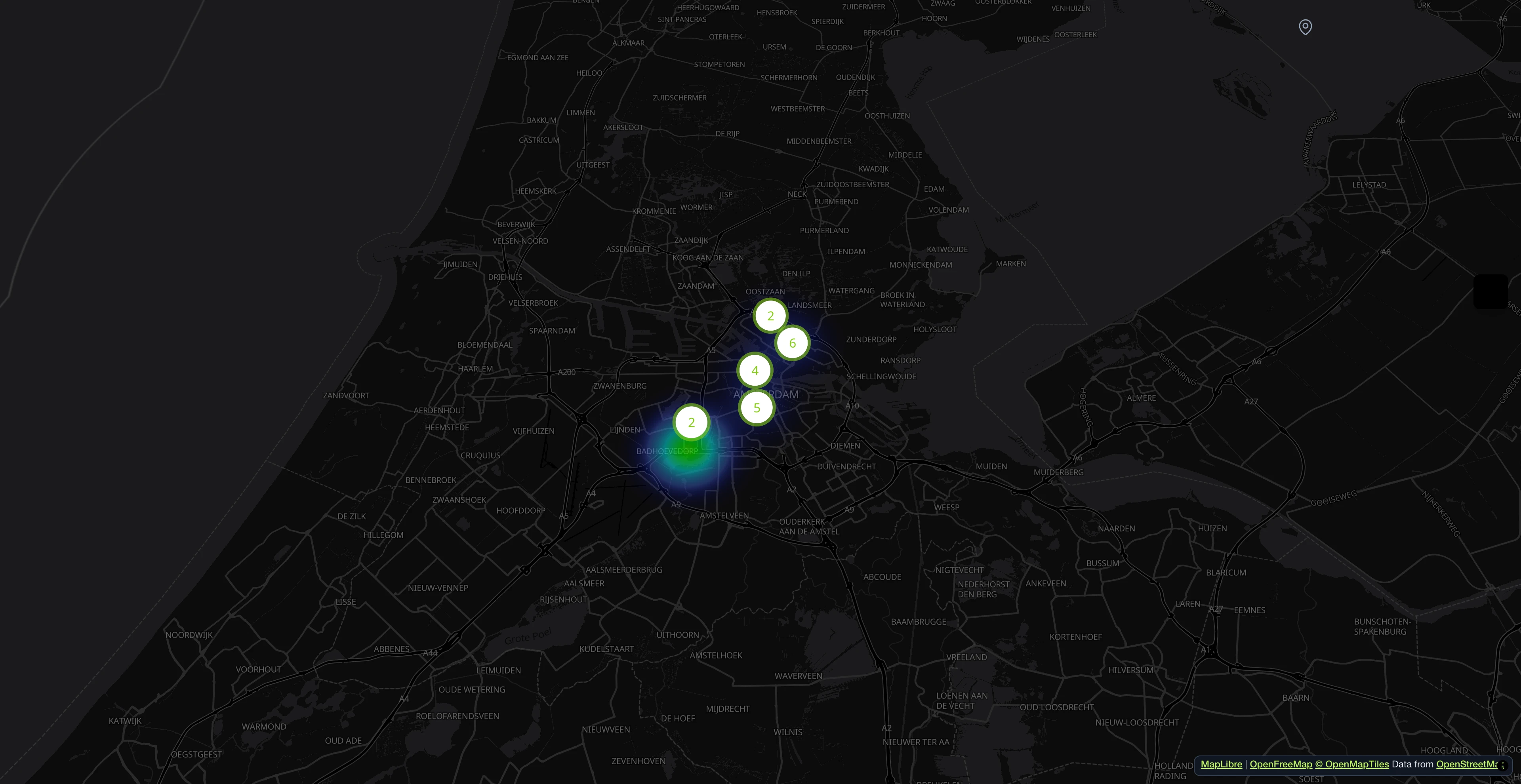
Deelnemers markeren problemen met foto's en locatie. Markers clusteren automatisch en zijn kleurgecodeerd per categorie.
Maak een foto, AI doet de rest
Bewoners uploaden een foto. AI herkent de categorie, stelt een beschrijving op en vult attributen in real time in. De melder bewerkt en verstuurt.

Meldingen op een interactieve kaart
Deelnemers markeren problemen met foto's en locatie. Markers clusteren automatisch en zijn kleurgecodeerd per categorie.

Alle meldingen in één oogopslag
Zoek, filter en sorteer alle binnenkomende meldingen. Wijs afdelingen toe, werk statussen bij en volg elk probleem van melding tot oplossing.

AI schrijft de melding voor jou
Upload een foto en het systeem genereert een gedetailleerde beschrijving, extraheert categorieattributen en scoort het gevaarsniveau. Bewerk voor het indienen.

AI-gestuurde verwerkingspipeline
Meldingen worden geïndexeerd op duplicaten, ingedeeld naar gevaarsniveau, gescoord op sentiment en automatisch gevuld met categorie-specifieke attributen. Alles als achtergrondtaak.

Open311-conform servicecatalogus
Elke categorie wordt geleverd als een Open311 GeoReport v2-service met getypte attributen, dropdown-opties en meertalige labels. Geen vendor lock-in.

Alles in één dashboard
Volg KPI's, beheer meldingen, wijs teams toe. AI analyseert foto's automatisch op gevaren en sentiment.

- Meer dan 1 miljoen meldingen sinds 2011
- Open Source
- Open311 GeoReport v2
- Gehost in de EU
Probeer het live:demo.mark-a-spot.com/amsterdam
Heb je facility management, eigen WMS-lagen, gestructureerde gegevensvelden per workflowstatus of multidistrict- en multistad-opstellingen nodig? Ontdek het volledige platform opmark-a-spot.com
Begin nu: Onderzoek & Veldgegevensverzameling
Beschrijf je project en onze AI configureert de perfecte workspace voor je.